
My dad filled out my first bank account form. I just signed where he pointed. Years later, opening one myself, the bank guy asked “savings or current?” and I froze. I said savings because it sounded safer.
It worked out fine. But I never actually knew why. So here’s the short version of what nobody explained to me, the different types of bank accounts and who each one is really for.
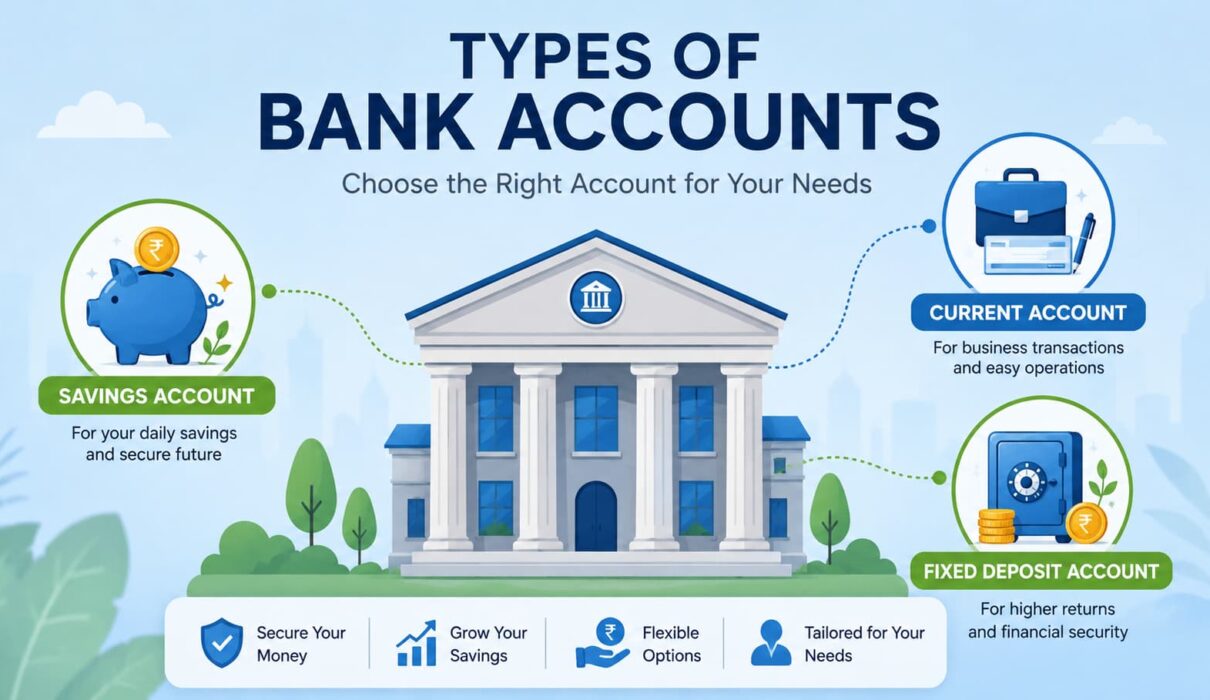
- Savings Account
- Current Account
- Fixed Deposit
- Recurring Deposit
- Salary Account
- Joint Account
- NRI Account
- Zero Balance Account
Savings Account
Everyone starts here. Money goes in, earns a little interest, comes out whenever you want. Most banks cap free withdrawals around four to six a month, cross it and there’s a small fee. Rarely an issue for normal use.

Current Account
Built for constant transactions, not interest.
A friend opened one for freelancing because it “sounded professional,” then complained his money wasn’t earning anything. That’s the deal, zero interest, but no cap on transactions. Made for shop owners, freelancers, and businesses moving money daily.
Fixed Deposit
You hand the bank a lump sum, agree not to touch it for a set period, and earn a higher interest rate in return. Break it early and you lose part of that interest. Only lock away money you won’t need in a hurry.

Recurring Deposit
Same idea as an FD, but you deposit a fixed amount every month instead of one lump sum. Good if you want to build a saving habit but don’t have a big amount sitting around yet.
Salary Account
Opened by your employer, really just a savings account with no minimum balance requirement. Leave the job, and after a few months without a salary credit, it quietly turns back into a regular savings account.

Joint Account
Shared between two or more people, couples, business partners, sometimes family. Everyone listed can operate it independently, so it only works well with real trust between the people involved.
NRI Account
For anyone living abroad but still handling money at home. NRE covers money earned abroad, NRO covers local income like rent. Tax rules differ, so check with your bank before picking one.
Zero Balance Account
No minimum balance, ever. A lighter version of a savings account, good for students or anyone opening their first account.
Side by Side
| Account Type | Interest? | Best For |
|---|---|---|
| Savings | Yes | Everyday individuals |
| Current | No | Businesses & freelancers |
| Fixed Deposit | Yes (higher) | Long-term lump sum |
| Recurring Deposit | Yes | Monthly saving habit |
| Salary | Yes | Employed individuals |
| Joint | Depends | Families & partners |
| NRI | Depends | Non-resident individuals |
| Zero Balance | Sometimes | Students & beginners |
Which One Do You Actually Need?
Forget the marketing. Daily spending? Savings account. Running a business? Current account. Money you won’t touch for a year? FD. Building a saving habit? RD.
There’s no single “best” account. Just the one that fits what you’re doing with your money right now.
On Photos, If You’re Publishing This Yourself
Keep images light, compressed photos or simple icons work fine. Give each image real alt text, like “savings account icon”, not “image1.png”. Rename files with your keyword before uploading, and turn on lazy loading if your site supports it.
A plugin like ShortPixel handles image compression automatically if you don’t want to do it by hand.
For official details on rates and regulation, see the Reserve Bank of India. For a general overview, Investopedia’s guide is a good read.
Related on this site: How to Open a Bank Account Online and Savings vs Current Account.
Quick Questions
How many types of bank accounts are there?
Seven to eight: savings, current, fixed deposit, recurring deposit, salary, joint, NRI, and zero balance.
Which account should a student open?
A zero balance savings account, almost always.
Do joint accounts earn interest?
Depends on the type underneath, a joint savings account earns interest, a joint current account doesn’t.