


A government bank, in plain terms, is any bank where the Government of India owns the bigger chunk of shares more than 50%. That single detail is why these banks are treated with a different level of trust, and why they end up carrying a big share of the country’s financial growth on their shoulders.
For the average person, this translates into everyday banking: personal loans, home loans, credit cards, fixed deposits, and the interest that quietly builds up in a regular savings account. Nothing exotic, just the basics done reliably.
We’ve ranked all 12 government banks below by market capitalisation. SBI takes the top spot by a wide margin, sitting at around ₹9.49 Lakh Crore. Bank of Baroda comes in second at ₹1.59 Lakh Crore, with Punjab National Bank close behind in third place at ₹1.48 Lakh Crore.
What Are Government Banks in India, Exactly?
Nothing fancy here — a government bank is simply one where the central government owns more than half the shares. That’s it. That single fact is what separates SBI or PNB from a private bank like HDFC or ICICI.
Beyond that, they do the same job as any other bank. Savings accounts, loans, credit cards, FDs — all of it, just with the government sitting behind it as the majority owner.
How Many Government Banks Are There in India in 2026?
Twelve. That’s the number as things stand in 2026.
It wasn’t always this tidy though — there used to be 27 of these banks floating around. A wave of mergers between 2017 and 2020 folded the smaller, weaker ones into bigger banks, and we ended up with the 12 we have today.
List of Government Banks in India (2026)
| Rank | Bank | Branches | HQ | Market Cap |
|---|---|---|---|---|
| 1 | State Bank of India | 23,085 | Mumbai | ₹9.49 Lakh Cr |
| 2 | Bank of Baroda | 8,500 | Vadodara | ₹1.59 Lakh Cr |
| 3 | Punjab National Bank | 10,189 | New Delhi | ₹1.48 Lakh Cr |
| 4 | Canara Bank | 9,861 | Bengaluru | ₹1.40 Lakh Cr |
| 5 | Union Bank of India | 8,621 | Mumbai | ₹1.37 Lakh Cr |
| 6 | Indian Bank | 5,922 | Chennai | ₹1.15 Lakh Cr |
| 7 | Indian Overseas Bank | 3,269 | Chennai | ₹70,782 Cr |
| 8 | Bank of India | 5,202 | Mumbai | ₹69,531 Cr |
| 9 | Bank of Maharashtra | 2,641 | Pune | ₹50,677 Cr |
| 10 | UCO Bank | 3,302 | Kolkata | ₹37,455 Cr |
| 11 | Central Bank of India | 4,608 | Mumbai | ₹34,639 Cr |
| 12 | Punjab & Sind Bank | 1,817 | New Delhi | ₹20,619 Cr |
A Quick Look at Each Government Bank
1. State Bank of India
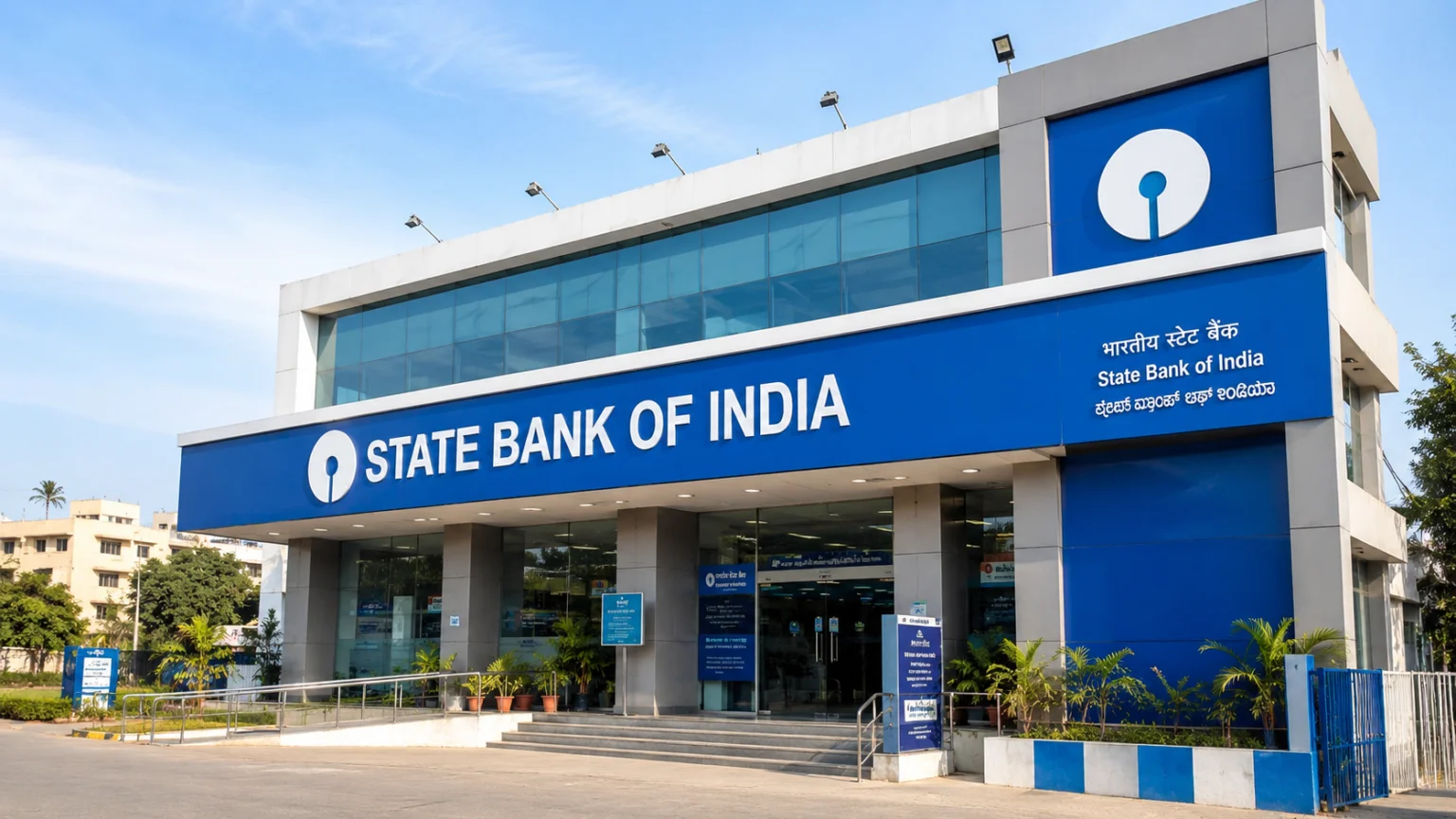
| Established | 1 July 1955 |
| Branches | 23,085 |
| ATMs | 63,580 |
| Chairperson | Shri Challa Sreenivasulu Setty |
| Headquarters | Mumbai, Maharashtra |
| Customer Care | 1800 112 211 |
Everyone defaults to SBI, and honestly, why wouldn’t they — it grew out of the old Imperial Bank and never really stopped expanding since. One thing worth knowing: it runs a Positive Pay System that catches cheque fraud before it happens, and MICR tech that makes cheque clearing quick instead of the three-day wait it used to be.
2. Bank of Baroda

| Established | 20 July 1908 |
| Founder | Sayajirao Gaekwad III |
| Branches | 8,500 |
| ATMs | 13,400 |
| Chairperson | Hasmukh Adhia |
| Headquarters | Vadodara, Gujarat |
| Customer Care | 1800 258 4455 |
Government holds nearly 64% here. The BoB World app is genuinely handy — you can even open an account through video KYC without stepping into a branch.
3. Punjab National Bank

| Established | 19 May 1894 |
| Founder | Dyal Singh Majithia |
| Branches | 10,189 |
| ATMs | 11,822 |
| Chairperson | K. G. Ananthakrishnan |
| Headquarters | New Delhi |
| Customer Care | 1800 1800 |
What I find genuinely interesting about PNB is how far back its “firsts” go — it started in Lahore in 1894 with barely ₹20,000 to its name, yet still managed to introduce India’s first “teller” system in 1944. By 2008-09 it had also pulled off something bigger banks hadn’t: putting every single branch onto core banking.
4. Canara Bank

| Established | 1 July 1906 |
| Founder | Shri Ammembal Subba Rao Pai |
| Branches | 9,861 |
| ATMs | 12,801 |
| Chairperson | Vijay Srirangan |
| Headquarters | Bengaluru, Karnataka |
| Customer Care | 1800 425 0018 |
Big on rural lending and financial inclusion. Offers home loans, four personal loan variants, and gold loans under its Swarna Loan scheme.
5. Union Bank of India

| Established | 11 November 1919 |
| Founder | Seth Sitaram Poddar |
| Branches | 8,621 |
| ATMs | 8,910 |
| Chairperson | Srinivasan Varadarajan |
| Headquarters | Mumbai, Maharashtra |
| Customer Care | 1800 208 2244 |
Here’s a stat that surprises people: the government owns 83.49% of Union Bank, higher than almost anyone else on this list. It’s also behind the Nari Shakti scheme, which puts ₹2 lakh to ₹10 lakh into the hands of women running their own businesses.
6. Indian Bank

| Established | 15 August 1907 |
| Founder | S. Rm. M. Ramaswami Chettiar |
| Branches | 5,922 |
| ATMs | 5,466 |
| MD & CEO | Shanti Lal Jain |
| Headquarters | Chennai, Tamil Nadu |
| Customer Care | 1800 4250 0000 |
Started with just ₹20 lakh, now does over ₹12 lakh crore in global business. Also among the early adopters of the RBI’s digital rupee (CBDC).
7. Indian Overseas Bank

| Established | 10 February 1937 |
| Founder | M. Ct. M. Chidambaram Chettyar |
| Branches | 3,269 |
| ATMs | 3,506 |
| Chairperson | Srinivasan Sridhar |
| Headquarters | Chennai, Tamil Nadu |
| Customer Care | 1800 425 4445 |
Built for foreign exchange business, and it shows — IOB still runs branches in Singapore, Hong Kong, Thailand, Sri Lanka, and South Korea.
8. Bank of India

| Established | 7 September 1906 |
| Founders | A group of Mumbai businessmen |
| Branches | 5,202 |
| ATMs | 8,166 |
| Chairperson | Shri M.R. Kumar |
| Headquarters | Mumbai, Maharashtra |
| Customer Care | 1800 103 1906 |
Zero minimum balance, free RTGS/NEFT, and up to 50% off processing fees on personal, home, and vehicle loans. Fairly low-friction to bank with.
9. Bank of Maharashtra

| Established | 16 September 1935 |
| Founder | D.K. Sathe & V. G. Kale |
| Branches | 2,641 |
| ATMs | 2,128 |
| MD & CEO | Nidhu Saxena |
| Headquarters | Pune, Maharashtra |
| Customer Care | 1800 233 4526 |
Not the flashiest name on this list, but it quietly runs over 2,600 branches across smaller towns and cities.
10. UCO Bank

| Established | 6 January 1943 |
| Founder | G. D. Birla |
| Branches | 3,302 |
| ATMs | 2,522 |
| Chairperson | Aravamudan Krishna Kumar |
| Headquarters | Kolkata, West Bengal |
| Customer Care | 1800 103 0123 |
Originally called United Commercial Bank, nationalised in 1969, and renamed UCO Bank by Parliament in 1985.
11. Central Bank of India

| Established | 21 December 1911 |
| Founder | Sir Sorabji Pochkhanawala |
| Branches | 4,608 |
| ATMs | 3,644+ |
| MD & CEO | M.V. Rao |
| Headquarters | Mumbai, Maharashtra |
| Customer Care | 1800 202 1911 |
The first commercial bank fully owned and run by Indians, dating back to 1911. Runs a Women Entrepreneur Cell and even offers door-to-door banking.
12. Punjab & Sind Bank

| Established | 24 June 1908 |
| Founders | Bhai Vir Singh, Sir Sunder Singh Majitha, Sardar Tarlochan Singh |
| Branches | 1,817 |
| ATMs | 3,052 |
| MD & CEO | Swarup Kumar Saha |
| Headquarters | New Delhi |
| Customer Care | 1800 419 8300 |
Set up for the Punjab and Sind regions in colonial India, nationalised only in 1980. It’s the smallest of the 12 by branch count.
Why Only 12 Government Banks Are Left
Back in April 2020, the government merged six smaller banks into bigger ones. That brought the count down from 20 to 12.
| Acquiring Bank | Merged Into It |
|---|---|
| Punjab National Bank | Oriental Bank of Commerce, United Bank of India |
| Union Bank of India | Andhra Bank, Corporation Bank |
| Canara Bank | Syndicate Bank |
| Indian Bank | Allahabad Bank |
Government Bank Stocks: 5-Year Returns
Some of these government banks in India have quietly turned into solid stock picks too.
| Bank | Current Market Price | 5-Year Return |
|---|---|---|
| Indian Bank | ₹1.15 Lakh Cr | 846.50% |
| Canara Bank | ₹1.41 Lakh Cr | 439.91% |
| Union Bank of India | ₹1.34 Lakh Cr | 429.56% |
| Bank of Maharashtra | ₹51,025 Cr | 356.43% |
| Bank of Baroda | ₹1.59 Lakh Cr | 310.51% |
What Actually Makes a Government Bank Different
Strip away the branding and government banks do pretty much what any bank does — loans, deposits, cards, forex, insurance. The differences show up elsewhere:
- They act as custodians of public money, not just private deposits.
- RBI and SEBI keep a closer, more constant eye on them.
- They show up in places private banks quietly skip — small towns, rural belts, places where footfall doesn’t justify a shiny private branch.
FAQs on Government Banks in India
How many government banks are there in India?
12, as of 2026.
Which is the biggest government bank in India?
State Bank of India, by both branches and market cap.
Which is the smallest?
Punjab & Sind Bank, with 1,817 branches.
Are government banks safer than private ones?
They’re seen as safer due to majority government ownership, though both types are RBI-regulated and covered under deposit insurance up to a set limit.
Final Word
Say what you want about the queues — government banks in India are still doing the heavy lifting, especially the moment you step outside a metro city. Are they perfect? Not even close. The apps could be smoother, the wait times shorter.
But for sheer reach, and for the trust people place in them, these 12 banks aren’t going anywhere anytime soon.