

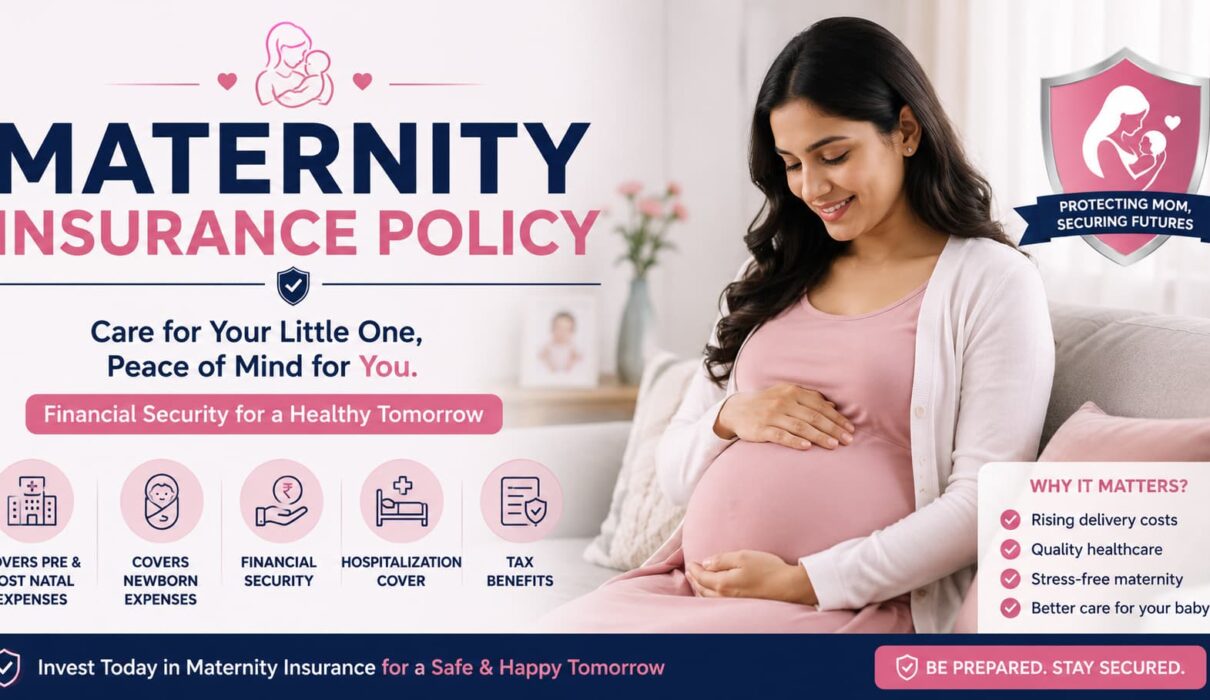
A maternity insurance policy is one of those things nobody thinks about until they actually need it. And by then, it’s usually too late to do much.
I’ve seen this happen with a few couples around me. They find out they’re expecting, get excited, start planning the nursery, and then the hospital bill shows up. That’s when the panic starts.
Delivery costs, especially for a C-section or any complication, can easily run into lakhs. A good maternity insurance policy takes a lot of that pressure off your shoulders. You’re not stuck worrying about money at a time that’s supposed to be happy.
So let’s go through this properly, step by step, without the confusing insurance jargon.

What Is a Maternity Insurance Policy, Really?
It’s a health insurance plan, or sometimes an add-on to one you already have, that covers pregnancy and childbirth costs.
Think hospital charges, delivery costs, doctor’s fees. A lot of plans also cover newborn care for the first few weeks after birth. Some companies sell this as its own separate plan. Others attach it to your family health cover.
Either way, the point is the same. Childbirth is natural, but the bills for it shouldn’t wreck your finances.
Why Should You Actually Get One?
Because medical costs never go the way you plan.
A normal delivery might not cost much at all. But things can change fast. An emergency C-section, a longer hospital stay, or a baby needing NICU care, and suddenly the bill has doubled or tripled.
Without a maternity insurance policy, you’re paying that yourself. With one, most of it gets handled.
This isn’t about expecting the worst. It’s just being ready in case it happens.
What Do These Policies Usually Cover?
Every insurer is a bit different, but most maternity insurance policies will include:
- Hospitalization for normal or cesarean delivery
- Pre-delivery and post-delivery medical expenses
- Newborn baby care, usually for the first 90 days
- Vaccination costs for the baby, in some plans
- Ambulance charges
- Pregnancy complications, if the plan specifically mentions it
Don’t assume every item on this list is automatically covered. Go through the policy brochure yourself. Some plans quietly skip a few of these, and that’s not something you want to discover during a hospital admission.
The Waiting Period Nobody Warns You About
This is the part that catches most people off guard.
You can’t buy a maternity insurance policy a month before delivery and expect it to pay out. Insurers apply what’s called a waiting period. Depending on the company, this can be anywhere from nine months to four years.
During that window, maternity claims just aren’t accepted. Doesn’t matter how genuine the case is.
So if starting a family is even a possibility in the next year or two, buy the policy now. Waiting until you’re already pregnant almost never works out.
How to Pick the Right Maternity Insurance Policy
Start With the Waiting Period
Make this your first filter, not something you check later. Compare two or three insurers and see who has the shortest waiting period. Even a year’s difference matters more than most people think.
Check the Sum Insured
Delivery costs in a big city are nowhere close to a smaller town. Make sure the coverage amount matches actual hospital rates where you live, not some average number from a brochure.
See If Newborn Coverage Is Included
Some policies cover the baby right from day one. Worth having, since early tests, check-ups, and vaccinations add up fast in the first few weeks.
Skip the Cheapest Option
A low premium looks great on paper, but weak coverage means you’ll pay more later anyway. Look at what’s included first. Worry about price after that.
Actually Read the Exclusions
Every maternity insurance policy has some exclusions. A few won’t cover a pregnancy that started before you bought the policy. Others cap how many claims you can make. Boring section, sure, but this is exactly where people get caught out.
Mistakes People Keep Making
The biggest one is waiting too long. Most people only start looking for a policy after finding out they’re pregnant. By then, the waiting period has already blocked the claim.
Another common one is not comparing options at all. Someone recommends an insurer, and people just sign up without checking two or three others first.
And then there’s skipping the policy document completely. Nobody wants to read insurance paperwork. But ten minutes on it now can save you from a rejected claim later, and that’s a much worse conversation to have.
A Quick Example
Say a couple buys a maternity insurance policy two years before they plan to have a baby. By the time they’re ready, the waiting period is long over.
When the baby arrives, most of the bill gets covered. No borrowing at the last minute, no touching savings meant for something else.
Now picture another couple who buys the policy right after finding out they’re expecting. They end up paying almost the whole bill out of pocket, just because the timing didn’t work for them.
Same goal, same intention, completely different result. Planning ahead made all the difference.
Does Age or Health Conditions Change Anything?
Sometimes, yes. A few insurers charge a slightly higher premium if you’re above a certain age or have conditions like diabetes or thyroid issues.
That’s not a reason to skip buying a policy though. Just be upfront about your medical history when you apply. Hiding things now can lead to a rejected claim later, and that defeats the whole purpose of having insurance.
Standalone Plan or Add-On, Which One?
Depends on what you already have. If your current health insurance offers a maternity add-on with decent coverage and a reasonable waiting period, that might be enough.
But if your plan doesn’t offer this, or the coverage is too limited, a standalone maternity insurance policy is usually worth it.
There’s no single right answer here. Compare what’s actually available to you and go from there.
Final Thoughts
A maternity insurance policy isn’t just another box to tick on your insurance checklist. It’s one of the more practical decisions you can make before starting a family.
If having a baby is even a possibility down the line, don’t wait for some perfect moment to buy this. The right time is usually right now, before the waiting period starts working against you.
Give it a bit of time. Compare two or three plans. Read the fine print, boring as it is. Pick the one that fits your situation, not just the one with the lowest price.
Future you, and your baby, will be glad you did.