

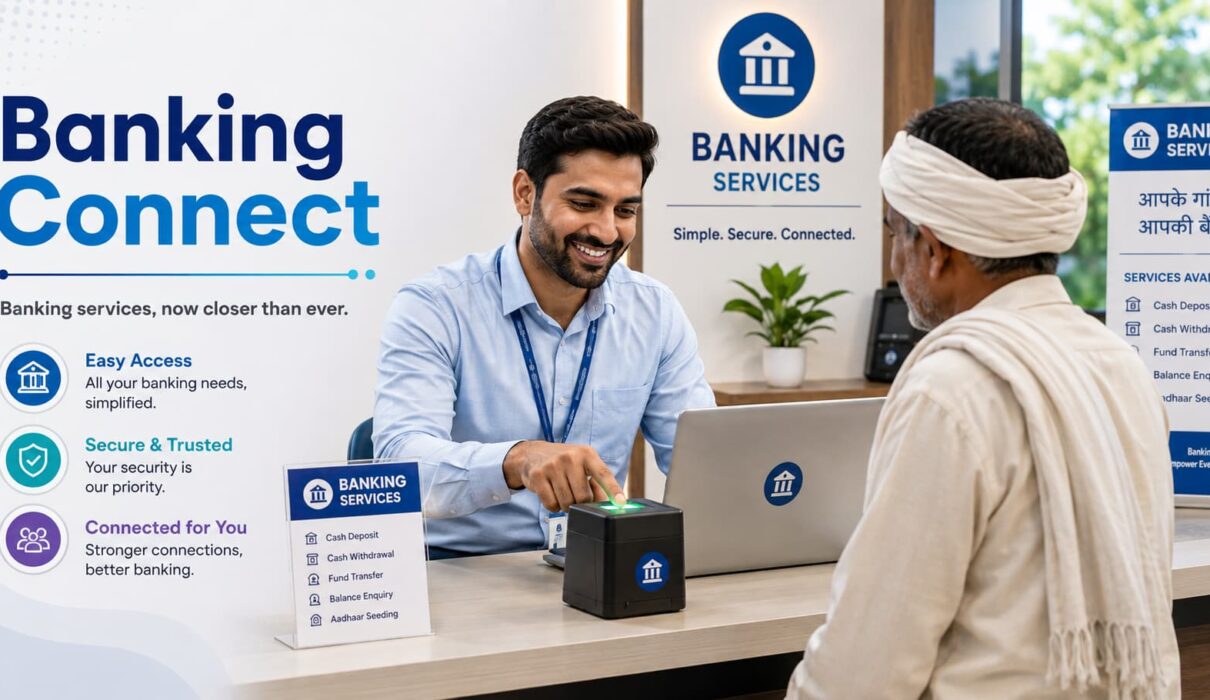
Banking Connect is one of those services that doesn’t get talked about much, yet it quietly affects millions of lives across rural India. It’s the reason someone in a small village can withdraw cash without travelling for hours to reach a bank branch.
What is Banking Connect?
Banking Connect is a system that allows people to access basic banking services through local agents, small service points, or mobile-based tools, without needing to visit a full bank branch.
A local agent, sometimes called a Bank Mitra or Customer Service Point, works as a link between the customer and the bank. Through this setup, people can deposit money, withdraw cash, transfer funds, and even open a basic savings account, all from a counter close to their home.
In short, it brings the bank to the customer instead of the other way around.
Why Banking Connect Matters
Bank branches are not evenly spread across the country. Many villages don’t have one nearby, and setting up a full branch in every small town simply isn’t practical for banks, both in terms of cost and staffing.
Banking Connect fills this gap in a cost-effective way. A daily wage worker no longer has to lose a day’s income just to withdraw money. Pension payments and government subsidies can reach people directly, without needing someone else to collect it on their behalf. Families in remote areas get a safer way to manage their money instead of keeping large amounts of cash at home.
These changes may sound minor individually, but together, they make a real difference in how people manage their finances day to day.
How Banking Connect Works
The process is designed to be simple, since many users are not familiar with complex banking procedures or digital tools.
Step 1: Local Agent Setup

A trained agent sets up a small counter with a biometric device connected to the bank’s system. This is usually a shop owner or a designated banking correspondent in the area.
Step 2: Identity Verification

The customer provides their Aadhaar number or account details, and their identity is confirmed through a fingerprint scan. This step keeps the process secure and reduces the chances of fraud.
Step 3: Completing the Transaction
Once verified, the transaction is processed within minutes. There’s no lengthy paperwork and no long wait, which makes the entire experience far more convenient than a traditional branch visit.
Services Available Through Banking Connect
Over time, Banking Connect has expanded well beyond basic cash transactions. It now covers a wide range of everyday banking needs, including cash deposits and withdrawals, basic account opening with simplified KYC, balance enquiries and mini statements, money transfers between accounts, bill payments and mobile recharges, and government pension or subsidy disbursements.
This wider range of services means people rely on it not just occasionally, but as a regular part of managing their finances.
Who Benefits Most from Banking Connect

While the service is open to anyone, certain groups gain the most from it. Farmers who depend on government support, daily wage earners who need quick access to cash, and women opening their first independent bank account all find real value in this system.
Small business owners also use it to manage day-to-day transactions, while pensioners benefit from receiving their payments directly, without depending on a family member or agent to collect it for them.
Is Banking Connect Safe?

Safety is a valid concern, and it’s worth addressing directly. Every transaction through Banking Connect requires biometric verification, which makes unauthorised access significantly harder. Agents are also registered and monitored by the bank, adding another layer of accountability to the process.
That said, customers should still stay alert. Checking passbooks regularly or reviewing SMS alerts after each transaction is a simple habit that adds an extra layer of protection.
Challenges Banking Connect Still Faces
Like any system, Banking Connect isn’t without its limitations. Network connectivity in remote areas can sometimes delay transactions. A small number of agents charge informal fees that go against official guidelines. Awareness also remains a challenge, as many potential users still don’t fully understand how the process works or what protections they’re entitled to.
Banks and regulatory bodies are addressing these issues through improved agent training and stricter oversight, though progress in remote regions tends to be gradual.
Banking Connect Versus Traditional Branch Banking

Banking Connect isn’t designed to replace traditional bank branches. Instead, it complements them by covering areas where a full branch isn’t financially viable.
Branches make sense in cities and larger towns, where enough customers justify the cost of running one. In smaller villages with limited populations, that same model doesn’t hold up economically. Banking Connect offers a lighter, more affordable alternative that still gets the essential job done.
Best Practices for Using Banking Connect
A few simple precautions can make the experience safer and smoother. Always confirm that the agent is officially registered with the bank before starting a transaction. Ask for a receipt every time, regardless of the transaction size. Keep your registered mobile number updated so you receive alerts promptly. Most importantly, never share your PIN or OTP with anyone, including the agent handling your transaction.
These small steps take very little effort but go a long way in preventing avoidable issues.
The Future of Banking Connect
As internet connectivity improves across rural areas and more people become comfortable with basic digital tools, Banking Connect is expected to grow further. It’s likely to integrate more closely with mobile banking platforms, making transactions even faster and more accessible.
The core objective remains the same: making sure no one is excluded from the banking system simply because of where they live.
Final Thoughts
Banking Connect has quietly reshaped how millions of people in India interact with formal banking. By bringing essential services closer to where people actually live, it has removed barriers that once kept many families outside the financial system entirely.
For those living far from a bank branch, Banking Connect offers a practical, secure, and accessible way to manage money without the burden of long travel or lost working hours. As the system continues to improve, it’s likely to play an even bigger role in India’s journey toward complete financial inclusion.